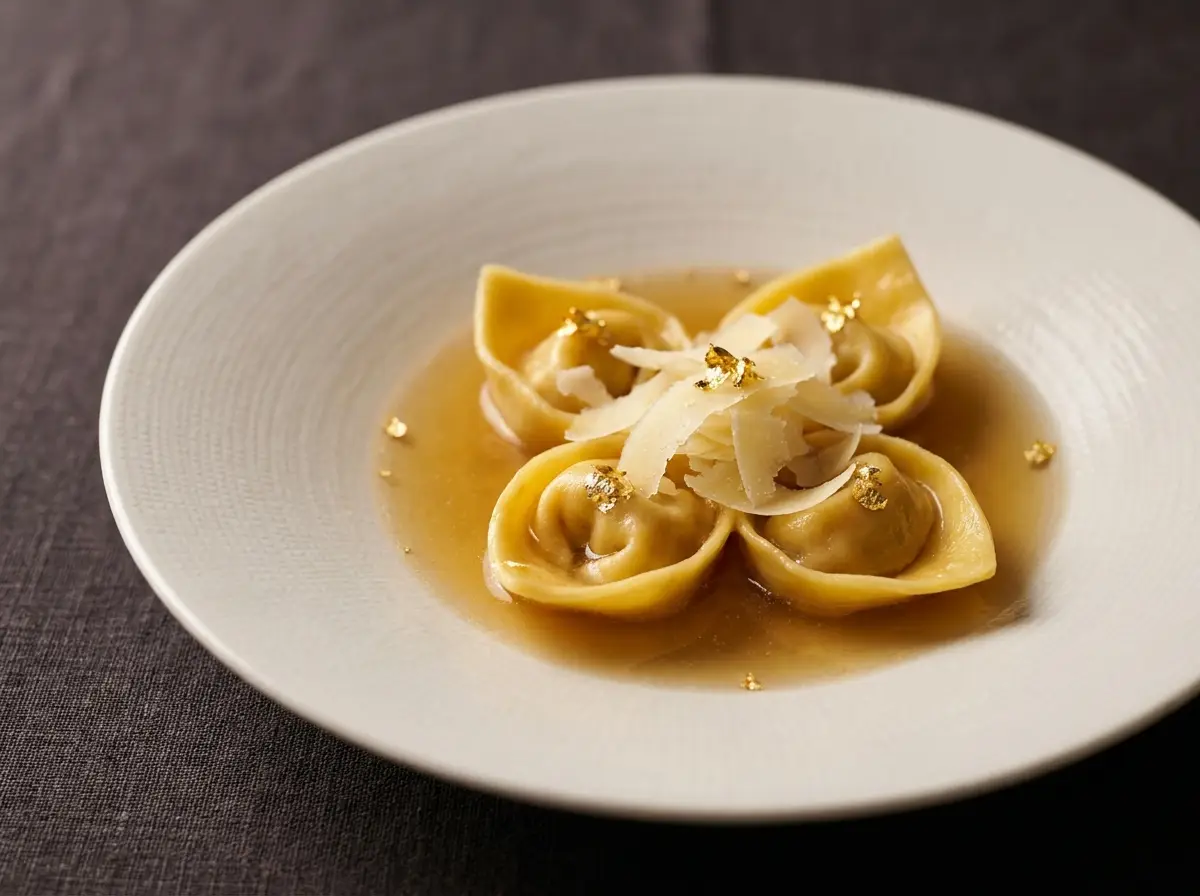
From Bergamo to the Peak of Asian Fine Dining
Umberto Bombana was born in Bergamo, in Italy's Lombardy region, a landscape of alpine foothills and a table tradition built on butter, cheese and unhurried craft. That northern Italian upbringing still shapes the cooking he is celebrated for today, thousands of kilometres away in Hong Kong. His restaurant, 8½ Otto e Mezzo BOMBANA, is widely reported as the first Italian restaurant outside Italy to earn three Michelin stars — a milestone that reframed what Italian cuisine could achieve on the world stage.
For MELIUS, Bombana embodies the argument at the heart of this platform: that authentic Italian cuisine, cooked abroad with conviction and discipline, need not be a diluted export. It can stand at the very summit of international gastronomy. His kitchen has become a reference point for chefs across Asia and beyond who want to prove that regional Italian cooking travels without losing its soul.
The King of White Truffles
Few chefs are as closely associated with a single ingredient as Bombana is with the white truffle. Nicknamed the 'King of White Truffles,' he has built a reputation on treating Alba's most prized autumn treasure with a reverence that borders on the devotional. His approach is famously restrained: a great truffle, in his philosophy, asks not to be reinvented but to be framed — laid over a simple egg, a plate of tajarin, or a warm risotto where its aroma can dominate the room.
That restraint is instructive. Bombana has long argued, in the editorial reading MELIUS takes of his work, that luxury in Italian cooking is not about complication but about the confidence to do less with better product. It is a lesson that separates genuine fine dining from the ornamental cooking that sometimes passes for it.
Why Authenticity Still Wins Abroad
Bombana's success abroad is often read as a story about location — the right restaurant in the right global city at the right moment. MELIUS reads it differently. His achievement rests on refusing to compromise the ingredients, techniques and seasonal rhythms of Italian cooking to suit an imagined 'international' palate.
This is the tension every serious Italian restaurant abroad must navigate. Adapt too much and the cuisine becomes a costume; adapt too little and it can feel like a museum piece. Bombana's kitchen threads that needle by keeping the grammar of Italian cooking intact — respect for the primary product, precise technique, and a menu that moves with the seasons — while presenting it with the polish an international clientele expects.
An Optimist by Conviction
The theme MELIUS attaches to Bombana — 'Optimistic on the Future of Italian Restaurants' — is not a slogan chosen for him but a fair characterisation of the trajectory his career describes. Where some veterans of the industry lament rising costs, thinning margins and the erosion of standards, Bombana's example points the other way: demand for genuine, well-sourced Italian food has never been broader, and diners across the world are increasingly able to tell the authentic from the imitation.
That optimism is grounded in evidence rather than sentiment. The global appetite for Italian dining continues to grow, and with it the opportunity for chefs who take the cuisine seriously. Bombana's own three-star kitchen is proof that the ceiling for Italian restaurants abroad is far higher than many once assumed.
A Reference Point for the Melius Guide
For a platform built to help diners find the finest authentic Italian dining outside of Italy, Bombana is a natural touchstone. He represents the standard MELIUS uses to score and celebrate restaurants: fidelity to Italian tradition, excellence of execution, and the ambition to treat cooking abroad as a first-class endeavour rather than a compromise.
As MELIUS builds its independent, AI-supported guide across 100 countries, chefs like Bombana define the upper reaches of what the platform is looking for. His story is a reminder that the future of Italian restaurants abroad is being written not in nostalgia but in kitchens that combine deep tradition with relentless craft — and that, on the evidence of his career, there is every reason to be optimistic.